Dress modestly, including a head covering when requested.
Explore Lahore
Discover Badshahi Mosque
One of Lahore's most famous Mughal buildings, a short distance from the monument.
A must-see for lovers of architecture; the atmosphere is best appreciated without rushing worshippers.
Visit tips
Plan around congregational prayers and Friday crowds.
Carry a small bag for shoes if required at the entrance.
Highlights
- Grand courtyard
- Red sandstone and marble
- Mughal domes, minarets and arches
About & basic information
One of Lahore's most famous Mughal buildings, a short distance from the monument.
- Attraction
- Badshahi Mosque
- Type
- Active mosque and Mughal landmark
- Location
- Fort Road, Walled City of Lahore
- Suggested time
- 45–90 minutes
Opening hours
Visiting access may pause for prayers and events
Confirm current access at the entrance or on the linked map before travelling, especially around public events.
Tickets & prices
Generally free entry; verify any special arrangements
Prices and eligibility can change; check the on-site ticket counter for the latest arrangement.
Discover its history, architecture & culture
Built under Aurangzeb
The mosque was completed in 1673 and remains a defining monument of Mughal Lahore.
Architectural rhythm
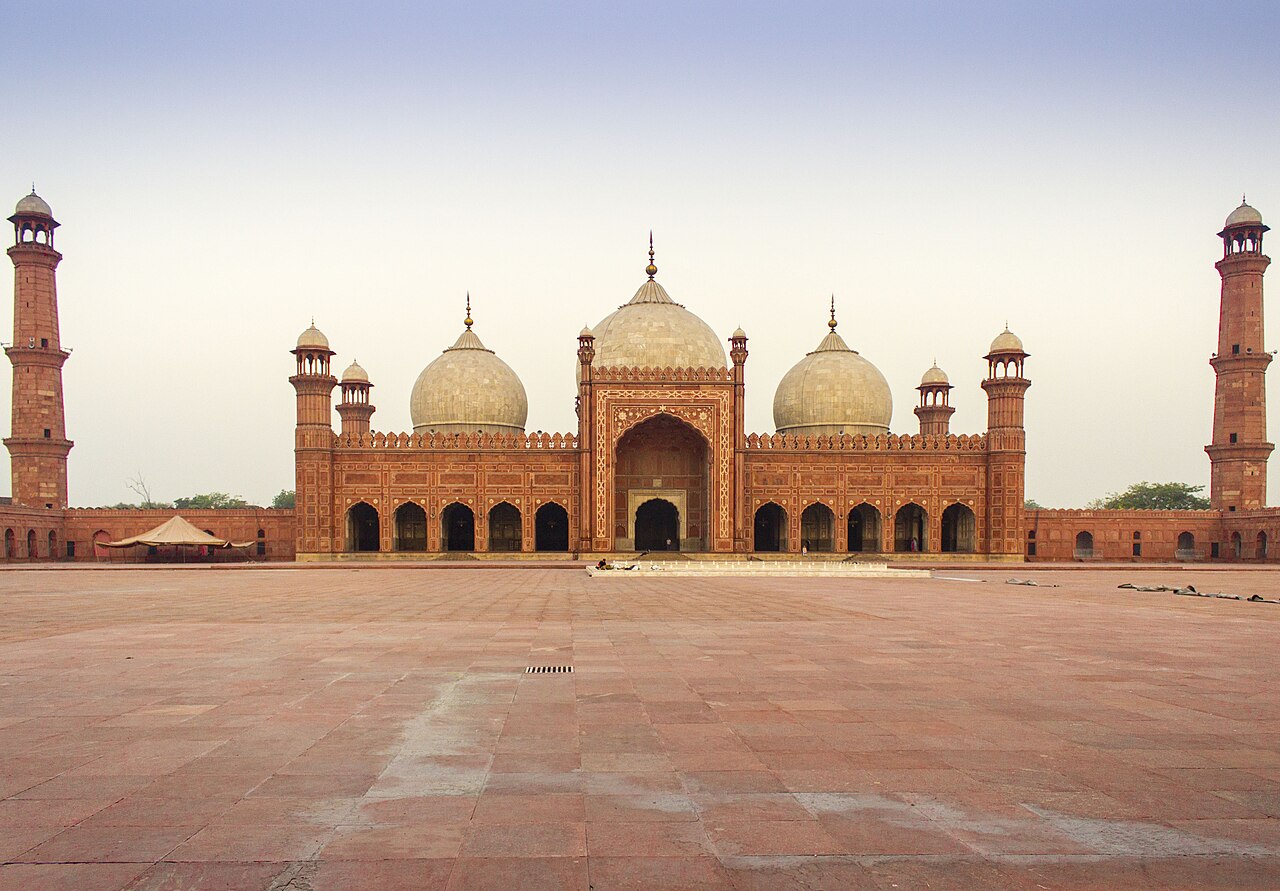
The immense courtyard, gateways and domed prayer hall create one of the city’s most recognisable compositions.
Living religious heritage
It remains a place of worship, so the visitor experience changes across prayer times.
Core experience
Pause in the courtyard, study the ornate details and take in the view toward the fort.
Recommended walking route
- Approach the main visitor entrance.
- Follow shoe and dress requirements.
- Explore the open courtyard and permitted prayer-hall areas.
- Continue toward Hazuri Bagh and Lahore Fort.
Before you go
- Respect worshippers and prayer areas.
- Avoid intrusive portrait photography.
- Follow staff guidance for access and footwear.
Photography viewpoints
- Symmetrical courtyard perspective.
- Arched gateways framing the central domes.
- Exterior skyline from permitted public viewpoints.
Where to stay
For a heritage-focused visit, consider a hotel near the Walled City or Fort Road; for more accommodation choice and easier citywide transfers, look around Mall Road or Gulberg. Check recent reviews and travel times before booking.
Visitor perspective
A must-see for lovers of architecture; the atmosphere is best appreciated without rushing worshippers.
Editorial visit-planning perspective; not a fabricated visitor review or live rating.
Getting here & location
Area: Fort Road, Walled City of Lahore
- Arrive by taxi near the Fort Road approach.
- Walk to Hazuri Bagh and Lahore Fort where entrances allow.
- Expect restricted vehicle access in crowded heritage lanes.
More details for planning your visit
Explore the historical background and practical details from this guide below.
At a glance
- Built: 1673, by Emperor Aurangzeb.
- Style: Mughal, in red sandstone and white marble.
- Where: beside Lahore Fort, Walled City of Lahore.
- Status: an active mosque and one of the largest in the world.
- Entry: generally free; modest dress required.
Explore the mosque
The Badshahi Mosque is a 17th-century Mughal mosque built by Emperor Aurangzeb.
It is among the largest mosques in the world and a centre of Lahore's skyline.
Highlights
- A vast courtyard that can hold tens of thousands of worshippers.
- Four minarets and a grand gatehouse.
- A marble domed prayer hall with fresco and inlay detail.
- Red sandstone set against the green of Hazuri Bagh.
History
Completed in 1673, it served as a ceremonial imperial mosque and remains an active place of worship.
Its red sandstone and marble make it a photographic counterpart to the monument.
Architecture & design
The mosque is built of red sandstone with marble inlay, arranged around a huge formal courtyard.
Symmetry, calligraphic decoration and the proportion of the gatehouse are typical of high Mughal design.
Cultural & religious significance
It is still a working mosque and a focal point of Lahore's religious and civic life.
For visitors it is also one of the city's defining landmarks, paired with the fort across Hazuri Bagh.
Visitor tips
Late afternoon into sunset is popular for light and fewer crowds.
Non-prayer times are easiest for a calm visit.
Dress modestly and remove shoes before entering the prayer hall.
Opening hours
As an active mosque it is generally open through the day, with access to the courtyard for visitors outside prayer times.
Exact visiting hours can vary, so confirm locally if your timing is fixed.
Tickets & entry
Entry is generally free; donation boxes are sometimes present for upkeep.
There is usually no ticket for visiting the courtyard and exterior.
Getting there
It is a short ride or walk beyond Iqbal Park, near Lahore Fort and Hazuri Bagh.
A ride-hailing cab or rickshaw is simplest; some visitors walk the old-city segment.
Suggested route
- From Minar-e-Pakistan, reach the mosque via Iqbal Park and Hazuri Bagh.
- Cross Hazuri Bagh to Lahore Fort next.
- Return through the old city or by ride-hailing.
Visitor notes
- Dress modestly; cover shoulders and knees.
- Remove shoes before entering the prayer hall.
- Ask before photographing people, especially during prayers.
Photo spots
- The gatehouse and courtyard with the minarets behind.
- The aligned view across Hazuri Bagh toward Lahore Fort.
- The sandstone glowing at sunset.
Where to stay
Lahore offers hotels and guesthouses across many budgets, concentrated near the Walled City, Mall Road and central districts.
Staying near the old city puts the mosque and fort within easy reach.
Visitor reviews
The Badshahi Mosque is consistently named among Lahore's must-see landmarks by travellers.
For current ratings and recent visitor notes, check Google Maps before you go.
Transport guide
The mosque sits beside Lahore Fort in the Walled City of Lahore, postal code 54000, Punjab, Pakistan.
Use a map app to reach the fort-mosque complex; ride-hailing can drop you near Hazuri Bagh.
Frequently asked questions
How far is Badshahi Mosque from Minar-e-Pakistan?
A short ride or walk beyond Iqbal Park, close to Lahore Fort and Hazuri Bagh.
What is its history?
A 17th-century Mughal mosque completed in 1673 by Emperor Aurangzeb; still an active place of worship.
What should I wear?
Modest clothing covering shoulders and knees; remove shoes in the prayer hall.
When is the best time to visit?
Late afternoon to sunset is popular for light; non-prayer times are calmer.
Can I photograph it?
Yes in public areas; ask before photographing people, especially during prayers.