Keep your voice low and allow space for people paying respects.
Explore Lahore
Discover Tomb of Allama Iqbal
The poet-philosopher whose name the park carries is honoured nearby.
A brief but meaningful stop that adds literary and national context to a wider historical walk.
Visit tips
Check access if a formal ceremony is taking place.
Combine the stop with Hazuri Bagh and Badshahi Mosque.
Highlights
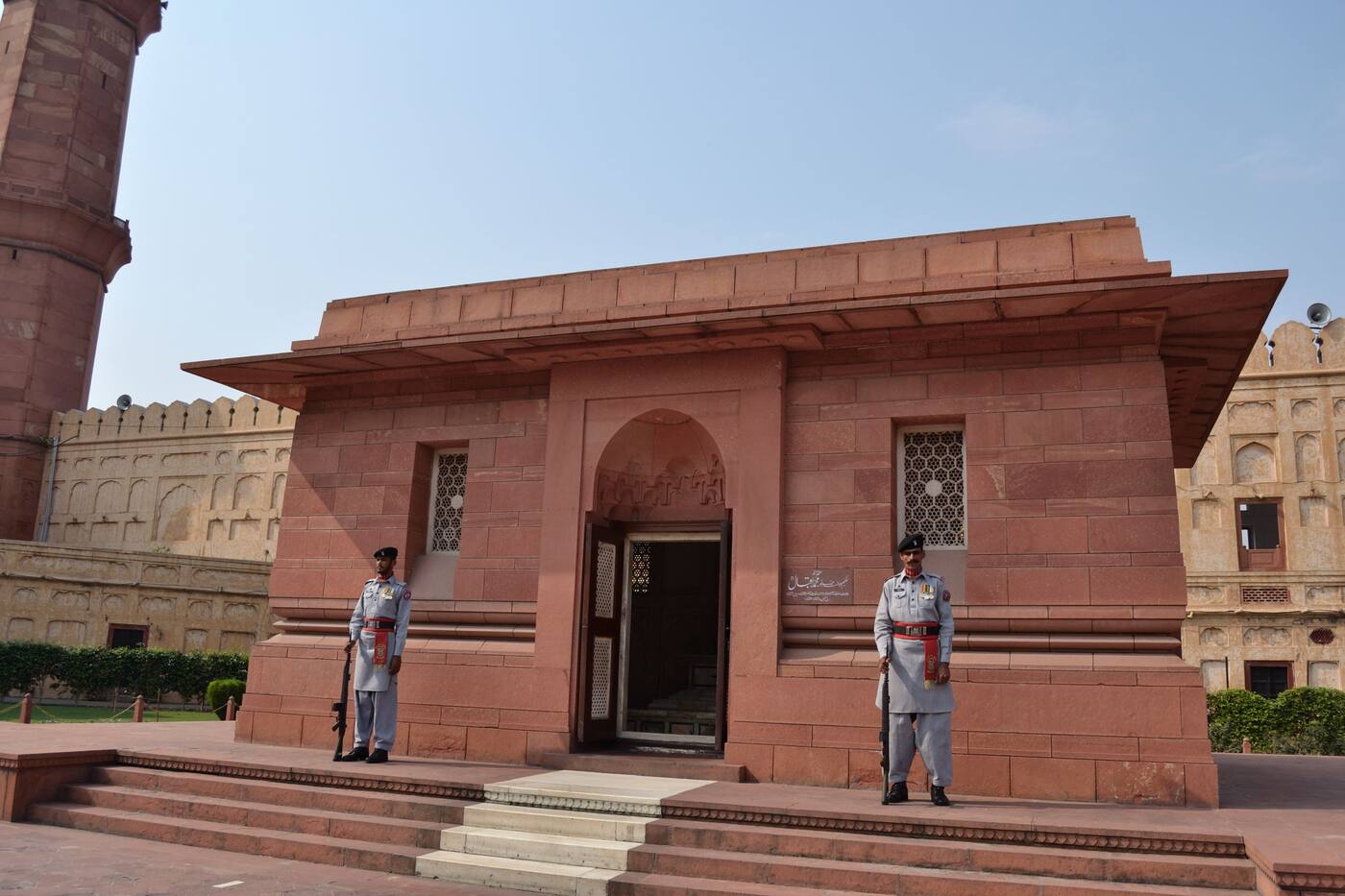
- Red sandstone mausoleum
- Allama Iqbal’s literary legacy
- Historic garden setting
About & basic information
The poet-philosopher whose name the park carries is honoured nearby.
- Attraction
- Tomb of Allama Iqbal
- Type
- Mausoleum and cultural memorial
- Location
- Hazuri Bagh precinct, between Lahore Fort and Badshahi Mosque
- Suggested time
- 20–40 minutes
Opening hours
Access can be restricted for ceremonies and security
Confirm current access at the entrance or on the linked map before travelling, especially around public events.
Tickets & prices
Normally no separate general admission; verify locally
Prices and eligibility can change; check the on-site ticket counter for the latest arrangement.
Discover its history, architecture & culture
The poet-philosopher
Muhammad Iqbal’s poetry and political thought profoundly shaped intellectual debates in South Asia.
Memorial architecture
The restrained sandstone structure differs from the scale of the surrounding Mughal monuments.
National remembrance
The tomb is a place for reflection and ceremonial tribute.
Core experience
Pause at the memorial, then view its relationship to the nearby mosque and fort.
Recommended walking route
- Enter the Hazuri Bagh heritage precinct.
- Approach the memorial respectfully.
- View the sandstone exterior and permitted areas.
- Continue to the neighbouring mosque or fort.
Before you go
- Maintain a respectful, quiet atmosphere.
- Observe security and photography instructions.
- Avoid blocking ceremonial access.
Photography viewpoints
- Sandstone entrance and lattice detail.
- Memorial within its garden setting.
- Wider heritage context from a permitted walkway.
Where to stay
For a heritage-focused visit, consider a hotel near the Walled City or Fort Road; for more accommodation choice and easier citywide transfers, look around Mall Road or Gulberg. Check recent reviews and travel times before booking.
Visitor perspective
A brief but meaningful stop that adds literary and national context to a wider historical walk.
Editorial visit-planning perspective; not a fabricated visitor review or live rating.
Getting here & location
Area: Hazuri Bagh precinct, between Lahore Fort and Badshahi Mosque
- Walk from Badshahi Mosque or Hazuri Bagh.
- Arrive at Fort Road by taxi if coming from elsewhere in Lahore.
- Ask on-site staff for the accessible entrance when security barriers are in place.
More details for planning your visit
Explore the historical background and practical details from this guide below.
At a glance
- What: a memorial to the poet-philosopher whose vision informed the Pakistan Movement.
- Where: within the wider Lahore historic area.
- Style: a respected civic memorial.
- Entry: generally free; modest, respectful conduct expected.
Explore the tomb
The Tomb of Allama Iqbal is a memorial to the poet-philosopher whose vision informed the Pakistan Movement.
It lies within the wider Lahore historic area, a natural add-on to a monument visit.
Highlights
- A quiet memorial space in the historic area.
- Link to Iqbal Park, which carries his name.
- A reflective add-on to a monument or old-city visit.
Who was Iqbal
Allama Iqbal is regarded as a key intellectual force behind the idea of a separate Muslim homeland.
His thought is part of the same story the Lahore Resolution and the monument represent.
History & design
The memorial was built to honour Iqbal and sits within Lahore's layered historic area.
Its design reflects the civic and cultural respect he commands in Pakistan.
Cultural significance
Iqbal is honoured as a national poet and thinker whose vision informed the Pakistan Movement.
Visiting both the tomb and the monument closes the loop between his thought and the 1940 resolution.
Visitor tips
Pair it with the monument, the resolution guide and the old-city circuit for a history-themed day.
See the one-day itinerary.
Opening hours
As a public memorial it is generally open during daylight hours.
Exact hours can vary, so confirm locally if your timing is fixed.
Tickets & entry
Entry is generally free.
There is usually no ticket for visiting the memorial grounds.
Getting there
Reach it by ride-hailing or as part of an old-city route that also takes in the fort and mosque.
Ask locally for the simplest gate or drop-off.
Suggested route
- Pair it with the monument, the resolution guide and the old-city circuit.
- Visit the tomb as a reflective stop after Minar-e-Pakistan.
- Continue into the Walled City via Delhi Gate.
Visiting notes
- It is a place of respect; keep conduct quiet and modest.
- Dress appropriately as at other civic and religious sites.
- Photography is generally acceptable in public areas.
Photo spots
- The memorial in its quiet historic setting.
- The link between Iqbal Park and the tomb that carries his name.
- Old-city lanes nearby on an old-city route.
Where to stay
Lahore offers hotels and guesthouses across many budgets, concentrated near the Walled City, Mall Road and central districts.
Staying near the old city keeps the historic area within easy reach.
Visitor reviews
Travellers interested in Pakistan's intellectual history often include the tomb alongside the monument.
For current ratings and recent visitor notes, check Google Maps before you go.
Transport guide
The tomb lies within the wider Lahore historic area, postal code 54000, Punjab, Pakistan.
Use a map app or ride-hailing; ask locally for the simplest gate or drop-off near the old city.
Context
Because Iqbal Park is named after him, visiting both closes the loop between the poet's vision and the monument that rose from the resolution.
Frequently asked questions
Who was Allama Iqbal?
A poet-philosopher regarded as a key intellectual force behind the idea of a separate Muslim homeland.
Where is his tomb?
In the wider Lahore historic area, reachable by ride-hailing or as part of an old-city route.
Why pair it with the monument?
Iqbal Park is named after him, and his vision links to the 1940 resolution the monument marks.
What is the dress code?
Modest, respectful attire as at other civic and religious sites.
How long to visit?
A short, reflective stop of 20 to 40 minutes fits most itineraries.